Redesigning From the Inside Out
What happens when an early‑stage app tries to serve a culture that hates ratings, lives in bars, and tells stories through Instagram, and the product isn’t really listening yet? This case study follows how uncorked moved from a rough MVP to a more honest, usable companion for natural wine people, through immersion in the scene and a series of focused UX decisions around check‑ins, memories and sharing.
Client
uncorked
Date
2024 - present
Industry
Wine-Tech
Scope of work
Native iOS 26
End-to-end Desing
Liquid Glass
Food & Drink

Natural wine sits at the intersection of craft, sustainability and counter‑culture, which makes the way people discover and drink it very different from traditional wine. Instead of chasing scores, appellations or big brands, natural wine drinkers care about how a wine is made, who’s behind it and whether the place they’re drinking in shares their values and vibe. Discovery is highly community‑driven: people rely on trusted bars, importers, sommeliers and friends, plus Instagram and curated lists, to navigate an often confusing space where “natural” is poorly defined and standards vary from city to city. That makes the experience exciting, but also fragmented and hard to access unless you already know the right people.


uncorked was built directly as a response to that reality. It’s a mobile app for discovering natural wine around the world through a curated map of bars, restaurants and shops that genuinely focus on natural wine, plus the people and recommendations behind them. Instead of being a generic venue directory or a traditional wine scoring tool, uncorked acts as a social discovery layer: users explore cities through trusted spots and curators, see where to drink, and build their own trails of bottles and places that match their taste and ethics.
At the same time, the natural‑wine app space is already shaped by Raisin, a well‑known player whose rapid growth has come at a cost: their business model depends on venues paying to be recommended, which has gradually diluted the quality and trustworthiness of the map. As more places appeared that didn’t really live up to the expectations of the community, users started to question whether the recommendations were driven by curation or by invoices. uncorked intentionally takes the opposite path: a tightly curated map and a business model that doesn’t rely on bars, restaurants or shops paying to be featured, so the experience can stay honest, independent and focused on real value for drinkers and owners.
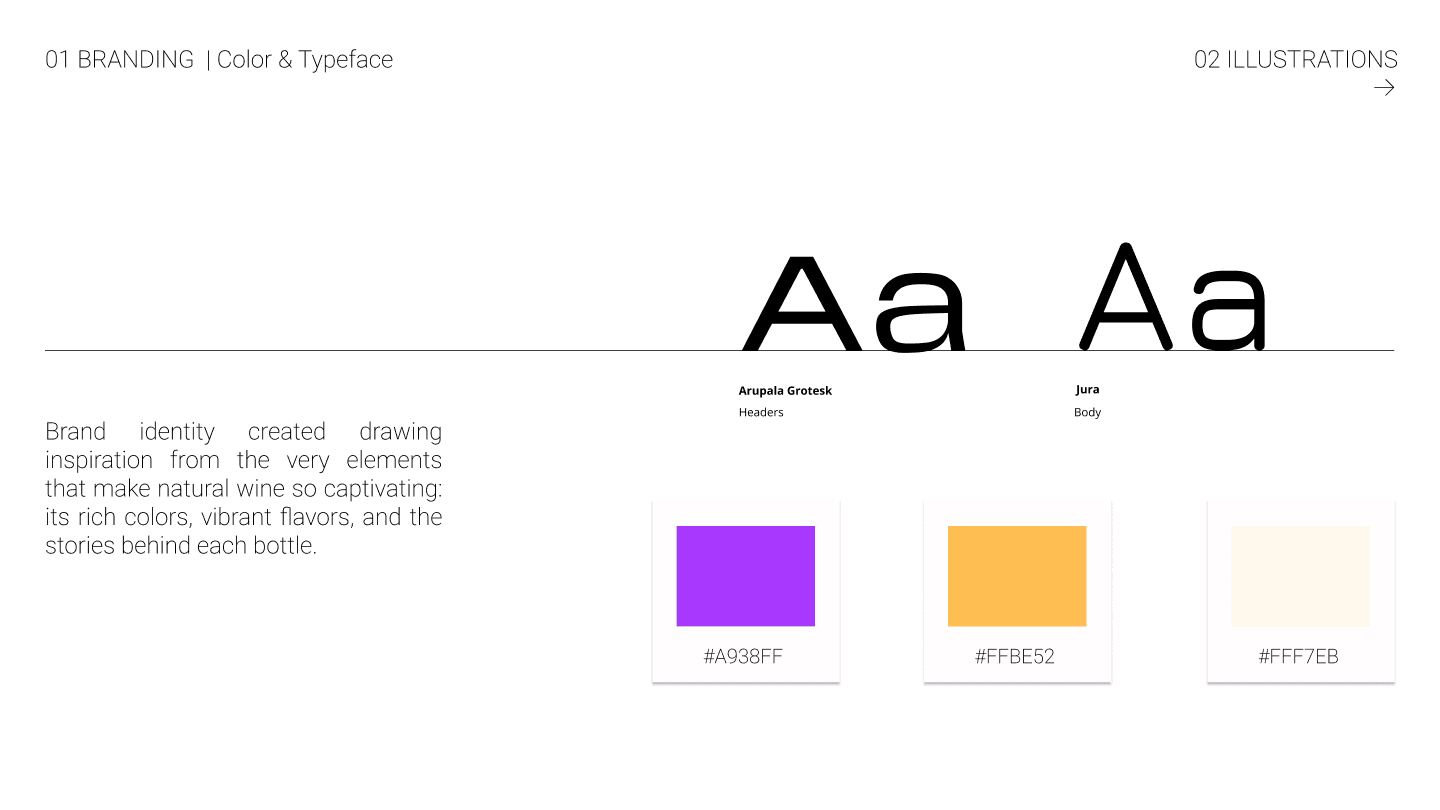
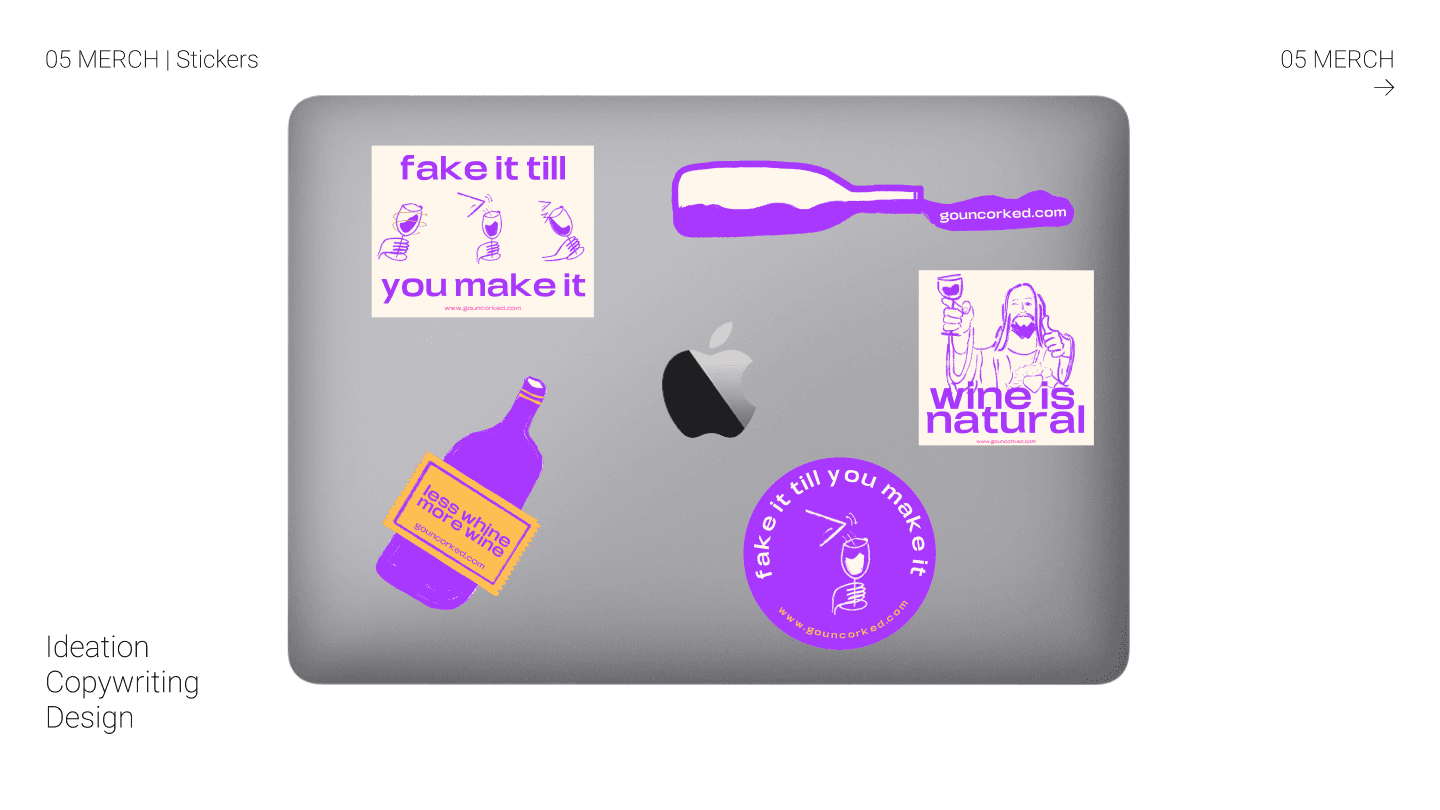
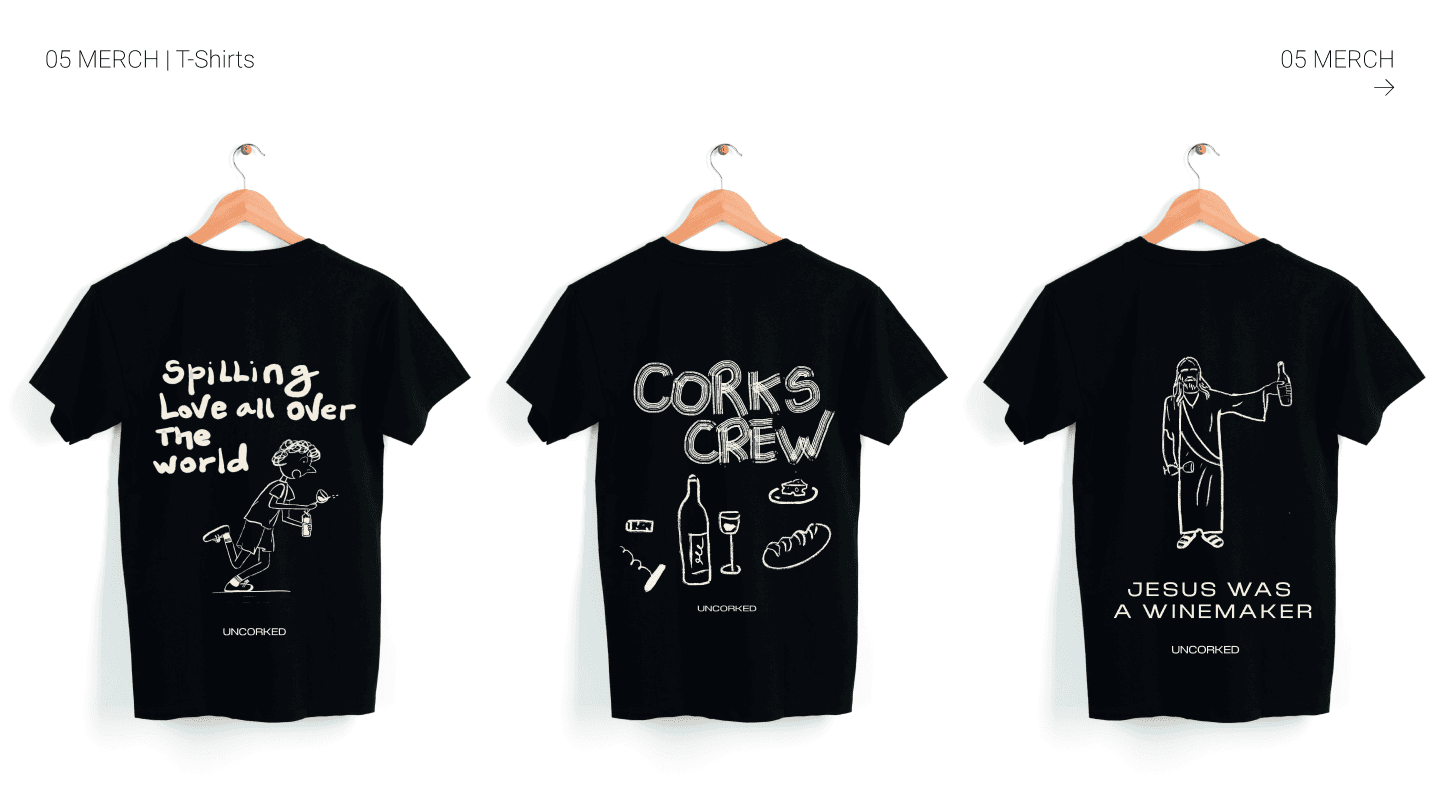
When uncorked started, the focus was clear: build a strong identity first. The project began with branding (defining the name, voice and visual universe of the app.) Once that foundation was in place, a very rough MVP was created by the developer. It's after that first MVP that I jumped in to start working mainly on the design of the interface: taking a not-so-functional product and giving it a coherent, recognizable UI that matched the brand.




From there, the shift was gradual but decisive: moving from “designing how it looks” to “designing how it works.” The way in was self‑taught (YouTube tutorials, a lot of reading) and then formalized through Ironhack’s UX/UI bootcamp. uncorked became the main playground to apply that learning, using real screens and flows to practice information architecture, interaction patterns and usability instead of just visual polish.
Given uncorked’s stage and resources, classic lab‑style research and large‑scale testing weren’t realistic, so the approach leaned heavily on immersion. Instead of running formal studies, the team adopted a kind of participant‑observation mindset: living in the natural wine scene, spending time in bars, talking to staff, sommeliers, owners, winemakers and early users, and using those conversations to shape and polish the first MVP before putting it in people’s hands. The goal was simple: understand how natural wine is actually lived, and let that reality drive the product.
After launch, the first major product changes focused on the biggest pain points in the app:
The first big problem was how long and heavy it felt for users to save a wine. People were out with friends, enjoying their night, and they didn’t want to spend ten minutes filling out a form just to remember a bottle later. The check‑in flow asked for too much, too early, and didn’t respect that context of use. To solve this, the flow was rebuilt around speed and minimal friction: a scanner was introduced to cut down manual input, only the essential fields remained mandatory, secondary details became optional, and wine/grape search was made faster and more forgiving. The result is a check‑in that users can complete in a few seconds, in the middle of a night out, without breaking the moment.
The second problem was the idea of rating itself. In the natural wine world, both drinkers and professionals are often uncomfortable with scoring bottles as if they were stable, industrial products. These wines are mostly artisanal and alive, harvests change, bottles vary, and people value the experience and the story as much as the liquid. Asking users to pin that down to a 1–5 number felt out of tune with the culture. The solution was to replace numeric ratings with three simple symbols, focused on memory rather than judgment: a way to clearly mark when someone absolutely loved a wine, when they absolutely hated it, and everything else in between. This keeps the emphasis on remembering meaningful extremes instead of pretending every bottle deserves a precise score.

The third problem was the gap between how users already share wine and how uncorked fit into that habit. Natural wine drinkers were posting bottles and nights on Instagram anyway, but they had to build every post manually, and the app stayed invisible in that ritual. To address this, a share‑to‑Instagram feature was designed to plug directly into their existing behavior. From uncorked, users can now generate richer posts with structured information about each wine in a couple of taps. For them, it’s a smoother, more informative way to show what they’re drinking; for uncorked, it quietly turns everyday sharing into ongoing, organic visibility.
Key learnings
Designing with real empathy, not imagined users
Being fully embedded in the natural wine scene (spending time in bars, listening to staff, owners, sommeliers, winemakers and early users) made it easier to design with genuine empathy. Instead of projecting assumptions onto abstract personas, I had concrete stories, frustrations and rituals in mind when making product decisions, which grounded uncorked’s UX in how people actually live natural wine.Getting honest behavior instead of “performance” feedback
Observing people in their own environment, relaxed and focused on enjoying their night, meant they weren’t trying to impress a researcher or give “smart” answers. I saw unfiltered behavior: what they ignored, what felt slow, what they instinctively reached for, and how they naturally shared wines with friends. That kind of honesty is hard to get in a formal test and became a key input in reshaping flows like check‑in and social sharing.Learning that reality doesn’t follow the textbook
Working on uncorked showed me that real products rarely move in clean, linear “textbook” steps. I learned by doing and watching the impact, adjusting the app based on what actually happened in bars and in people’s hands, rather than trying to force a perfect process. That experience taught me to respect methodology, but not to be constrained by it when real life clearly needs something different.